
Course / Course Details
By - Ms Valina Jenisha DAlmeida
1. BASIC BIOLOGY KNOWLEDGE
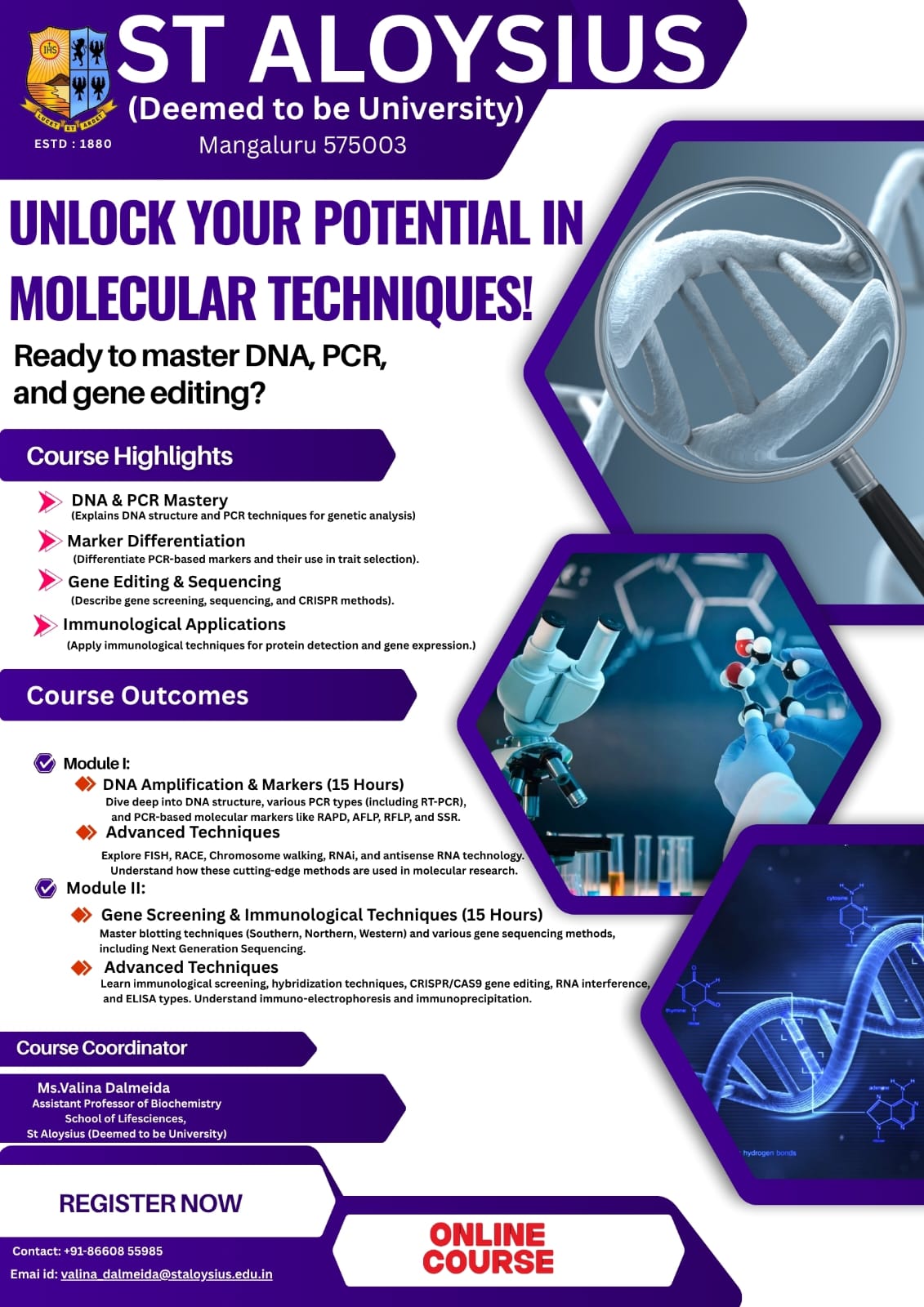
This course introduces the principles and applications of DNA amplification, molecular markers, and marker-assisted selection in molecular biology. It covers PCR and its variants, gene screening methods, and advanced techniques such as FISH, RACE, chromosome walking, and RNA interference. The course also provides an overview of gene sequencing technologies, from classical methods to next-generation sequencing. Additionally, students learn immunological techniques and CRISPR/Cas9 gene editing relevant to modern biotechnology and molecular research.
Explain the structure of DNA and the principles, mechanism, and variants of PCR, including RT-PCR, and apply these techniques in molecular analysis.
Differentiate and evaluate PCR-based molecular markers (RAPD, AFLP, RFLP, SSR) and explain their role in marker-assisted selection and genetic analysis.
Describe and interpret advanced nucleic acid–based techniques such as FISH, RACE, chromosome walking, RNA interference, and antisense RNA technology in gene identification and regulation.
Analyze and apply gene screening and blotting techniques (Southern, Northern, Western blotting, differential display, colony/plaque/dot blot hybridization) for detection and characterization of genes and gene expression.
Compare and assess gene sequencing technologies, including chemical sequencing, enzymatic sequencing, pyrosequencing, and next-generation sequencing, for genomic and transcriptomic studies.
Demonstrate understanding of immunological techniques such as ELISA (types), immuno-electrophoresis, and immunoprecipitation, and apply them in molecular diagnostics and research.
Explain the principles and applications of CRISPR/Cas9–mediated targeted gene editing and RNA-mediated gene silencing in functional genomics and biotechnology.
Discover Additional Learning Opportunities
 Static